
Water supply is essential for any habitation and unusually for a settlement, Lucca does not have a river running through the city.
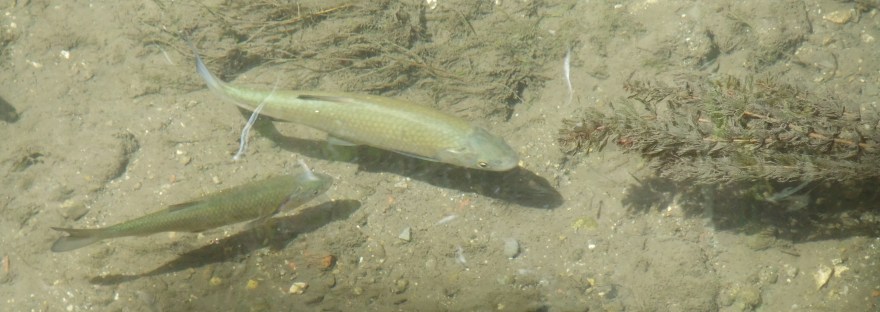
I have yet to find evidence on the internet but have read that the moat which surrounds the fortified wall and the fosse which runs through the city are supplied by a diversion of the river to the north of Lucca. Without citation, I believe that there is an underground channel (possibly constructed by the Romans) which leads from the River Serchio (Flume Serchio) to the north of Lucca directly into the current city and surrounding moat. Incidentally the moat definitely has fish and you do not need a citation for that!
It would seem to be the case that water supply to the city historically was of variable volume and quality. In addition to the diverted flow from the Serchio people living on the Luccanise plain would have used wells to provide drinking water.
There must have been some serious issues with the provision of drinking water to the city of Lucca because in 1823 Maria Luisa of Spain – then Duchess of Lucca – commissioned Lorenzo Nottolini to design and construct an aqueduct which would provide fresh, clean, drinking water to the inhabitants of Lucca. According to the internet, Maria Luisa was a gutsy broad who, though of noble birth, had a tough life.
During her six years in control of Lucca she obliterated all she could of Elisa Bonaparte Baciocchi’s legacy on account of the fact that Elisa was Napoleon Bonaparte’s sister and Napoleon was not high on Maria Luisa’s dinner party guest list. How could one man irritate so many people?
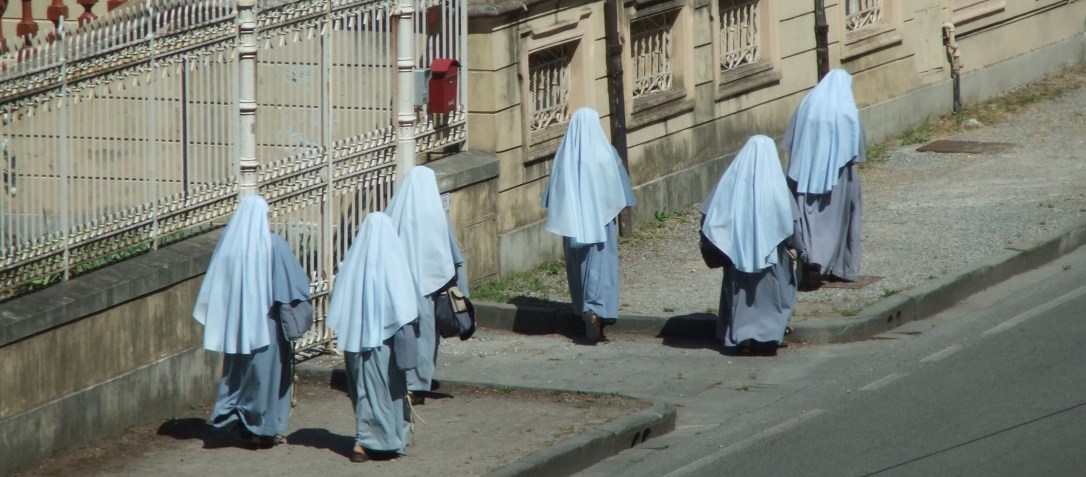
Amongst other key contributions she commissioned 17 Convents some of which are active today.
However, Maria Luisa is possibly best know for the Nottolini aquaduct.
Maria Luisa did not live to see the completion of the aqueduct but we can still enjoy this neo classical gem today in its entirety except for a slight hiatus thanks to the construction of the Autostrada by Benito Mussolini’s government in 1928–1932.
Acquedotto del Nottolini is visible on Google Maps lying to the south east of the city walls. At street level you would be forgiven for believing it was of roman construction. The water is carried from the springs which appear on the slopes of Monte di Vorno or Monte Pisano via a domed circular stone temple-cistern which acts as a filter. The water is then conveyed via the aqueduct which has over 400 arches covering a distance of approximately 3.25 kilometers. The water arrives at the temple-tank of San Concordio. It is then piped into the city where even today you will see locals and visitors filling up containers with the spring water or simply drinking from the fountains.
Now dear reader the USP of this blog page. Water
Supermarket shopping is not high on the average persons ‘holiday activity’ list. To an extent it can be avoided by eating out. However, the tap water in Lucca is not recommended for drinking. It appears to be fine for cooking vegetables and for teeth brushing but not for a refreshing drink on a hot day.
This is the most brilliant top tip for holiday makers staying in self-catering accommodation (without a car) in Lucca – Esselunga will deliver your shopping to your accommodation. There is a charge but frankly it is worth it. If only we had known on Day 1! We would have had two weeks of bottled water delivered straight to the apartment together, of course, with a bottle or two of the local wine.
https://www.esselunga.it/cms/homepage.html
And now for the top tip today……….. If you spend months planning a trip do make a ‘Must To Do’ list. If you fail to do this, you may find that on the last day of your trip and with only hours until departure, you may see this at the end of an unvisited road …….
 Less than 200 meters from the entrance to our apartment and having assumed that the brick supports were part of the railway system … it finally dawned on us that this was the aqueduct Lucca is so famous for!

 Claudia Bow